

The Art of the Blank Page
Why entering unfamiliar rooms without preconceived notions changes how you build, and how listening to ground reality beats corporate dogma.
"The moment you enter a discussion convinced of what the other person is going to say, you stop listening to them. You are only listening to your own echo."
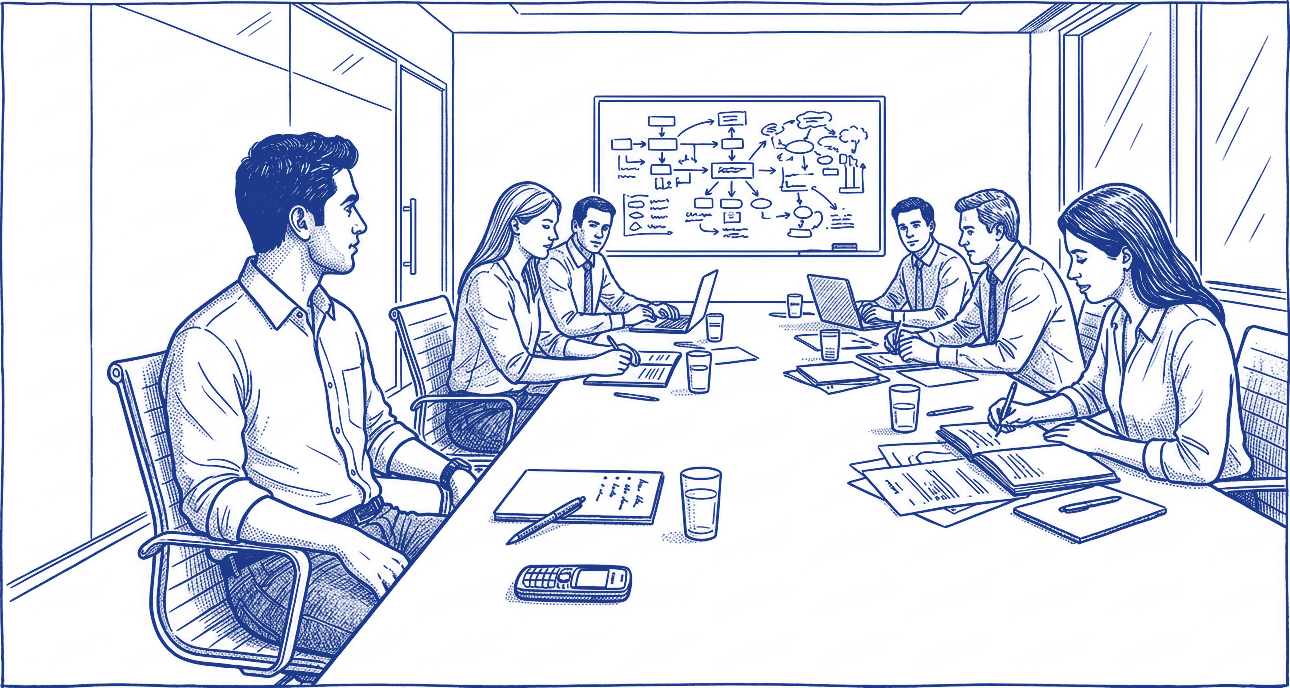
Before I stepped into my first corporate role, my father offered a single observation that has stayed with me through every negotiation, strategy meeting, and category build since.
He looked at me and said quietly:
“Never go into any meeting or discussion with preconceived notions. Leave your assumptions outside the door. If your mind is already full before you sit down, you will hear only what you expect to hear, not what is actually being said.”
At the time, it sounded like a simple piece of paternal wisdom. It was only years later, navigating the fast-moving corporate corridors of the internet sector, that I realised how profound that counsel truly was.
Bringing the Shop Floor to the Screen
When I joined TimesJobs in early 2006, the digital world was modern, dynamic, and free-flowing.
It was completely new terrain for me, and I had an enormous amount to absorb. Yet, I was not arriving with an empty head. Since 1995, while still at university, I had run a retail PC business. That experience was my true foundation. Behind a retail counter, you do not deal in abstract theories. You deal with living, breathing consumer psychology. You see the hesitation in a customer’s eyes, the awkwardness of asking about price, and how easily even the smallest bit of friction can cause someone to turn around and walk out the door.
Many in the corporate world arrived with preconceived notions of how an online portal should behave. They treated digital recruitment like an elite software exercise, assuming users would sit at desktop computers with high-speed connections and patiently navigate complicated forms.
In India at that time, millions of jobseekers did not own personal computers, but they carried basic mobile handsets in their pockets. Instead of trying to force them onto web pages they could not access, we launched TimesJobs on Mobile using 8888 SMS short codes. By meeting people where they actually were, rather than where the corporate plan wished them to be, we unlocked an entirely new audience.
Stripping Away the Toppings
In September 2006, when I took over at JobStreet India, the portal was registering a modest trickle of forty to fifty resume sign-ups a day.
The conventional corporate diagnosis for low traffic is almost always to add more: add more features, add more banners, run expensive marketing campaigns, or add more mandatory fields to capture candidate data. In cooking, when a sauce lacks depth, an amateur keeps tossing in extra toppings and spices to mask the dish.
We took the opposite approach. We anchored everything in simplification.
We sat down and looked at the candidate’s journey with a completely blank page, asking elementary questions rooted in basic psychology: Why are we asking someone for ten pages of career history before we have shown them a single relevant job? Why are we creating barriers when our only goal is to welcome them in?
We stripped away the clutter. We removed the unnecessary toppings, simplified the sign-up flow to its bare essentials, and focused entirely on candidate trust and speed.
Within months, that quiet portal went from forty or fifty daily registrations to over 15,000 resume sign-ups every single day. We did not achieve that by being the loudest voice in the market. We achieved it by removing friction and listening to how ordinary people actually behaved.
The Mental Discipline of Arriving Empty
Most professional mistakes do not happen because people lack intelligence. They happen because people walk into rooms determined to prove what they already know.
We enter discussions with scripts rehearsed to the syllable. We enter new markets burdened by the habits of our previous jobs. We assume we understand our customers without ever watching them try to complete a simple task on a screen.
My father’s principle was an exercise in mental discipline. It meant having the quiet confidence to arrive with a blank page:
- It changes your posture: You stop waiting for your turn to speak and start observing the unspoken hesitations that reveal what people really want.
- It keeps you humble: When you admit that you do not have all the answers, you become curious enough to notice the ground truths that everyone else takes for granted.
- It makes room for clarity: You realise that growth rarely comes from piling on more complexity. It comes from having the nerve to strip away the noise until only what is vital remains.
Connected Note
The moment you enter a discussion convinced of what the other person is going to say, you stop listening to them. You are only listening to your own echo.

Advisor, operator, and storyteller with Lucknow roots. Decades of building category-creating enterprises and navigating life with patience taught him the quiet power of simplification.
Join the Discussion on X
Have thoughts, a contrasting view, or battle scars of your own? Join the conversation on X. Zero spam, real perspectives.