

Anything can happen over a hot cup of tea!
For some, tea is addiction. For a lot of others', it's an emotion.
"Feeling sad, have tea. Feeling happy, have tea. Feeling nothing, have tea. There's nothing which can't be fixed by a hot cup of tea."
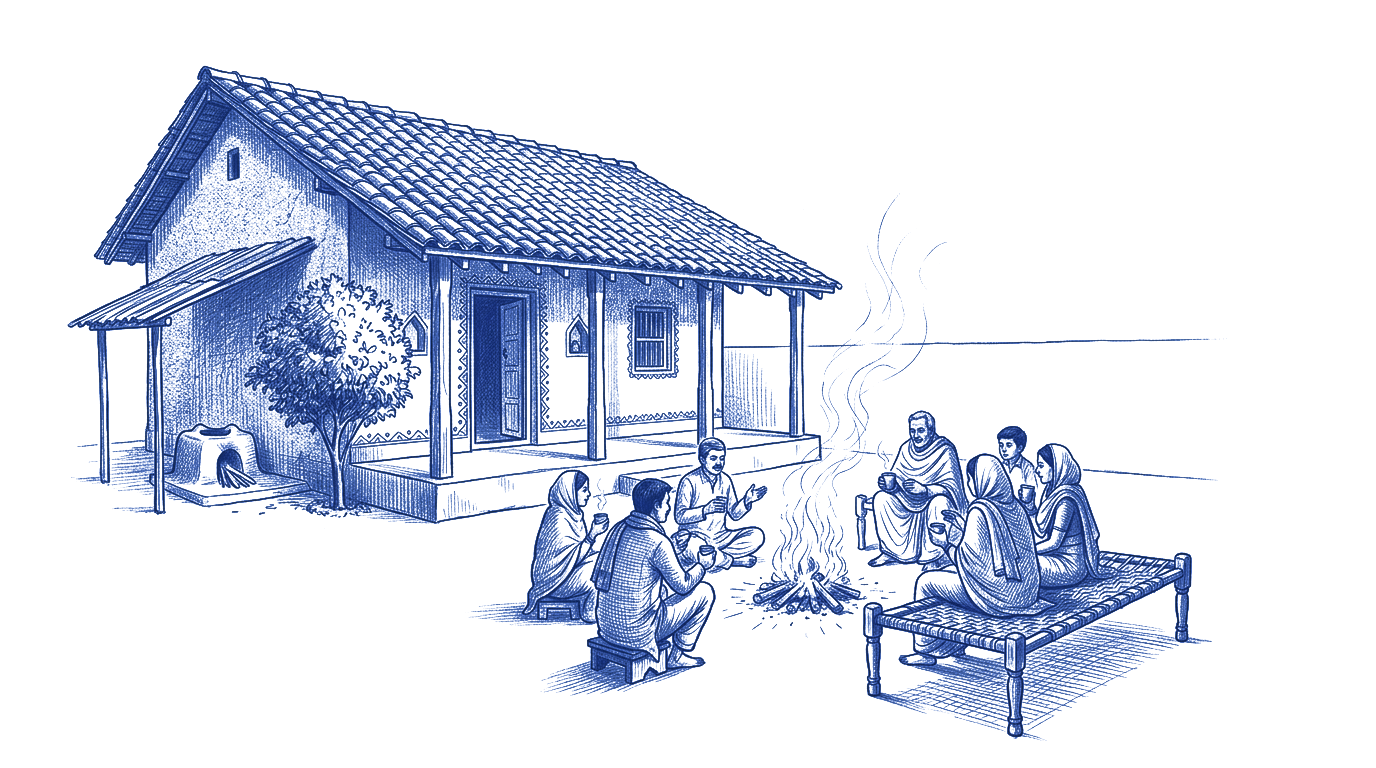
In our family, breakfast in town was always a measured affair. But holidays at my grandfather’s house in the countryside subscribed to no such superstition.
On those crisp winter mornings, our large extended family would gather in the sunlit courtyard to have a simple breakfast of parathas and chai. Some of us sat on the woven charpai, while others huddled on low wooden stools around it. The parathas arrived from the kitchen in an endless relay, vanishing almost as quickly as they were served, while a generous kettle kept refilling our cups again and again. It was in stark contrast to the quiet discipline of our home in town, and I cannot recall a more satisfying breakfast in all my life. That was where my quiet love affair with tea began.
The crossing from university into adulthood was faithfully sustained by chai. In Hindi, there is an old idiom: “Ghat-ghat ka paani peena” (to drink water from many river banks), describing someone who has gathered deep worldly wisdom by travelling widely and dealing with all manner of folk and circumstance. For those of us who grew up in Lucknow, water was simply replaced by chai. You did not measure a man’s journey by the wells he had visited, but by the tea stalls where he had lingered.
My first genuine culinary heartbreak arrived when I moved south to Bangalore circa 2004. In those years, the city ran almost exclusively on filter coffee, and tea culture was virtually non-existent. For the better part of a year, finding a decent cup was an exercise in futility. Living in rented lodgings without a kitchen of my own only made matters worse, as brewing my own tea was out of the question.
The Brew That Sealed an Investment
A decade later, in 2014, when we were laying the early foundations of SmarterHomes, I received an unexpected phone call from a British gentleman named Max. We spoke at length about our smart water meter and startups in general. Within two months, he flew to Bangalore to meet us in person.
A month later, Max invited us to London. We gathered at his home alongside a small circle of friends. Whilst we were finishing our discussion and getting ready for the next meeting, Max smiled and announced to the room: “Gents, Vivek makes wonderful tea.”
So I stepped into his kitchen and put the sauce pan on. Through that single ritual, we met our first overseas investor, a gentleman who proved just as devoted to the brew as he was to our business. That summer, while staying at a nearby flat in London, both of them would arrive at my door first thing in the morning, waiting patiently by the counter with an unhurried smile, ready for the day’s first pot.
The Recipe: A Two-Cup Morning Brew
Anyone can brew a decent cup of tea, and nearly everyone carries their own quiet dogma about how it ought to be prepared. My own preference leans towards depth, warmth, and restraint: a balanced marriage of strong leaf, whole milk, crushed root ginger, and just enough sweetness to soften the edges.
Yield: 2 cups (approximately 180 ml each)
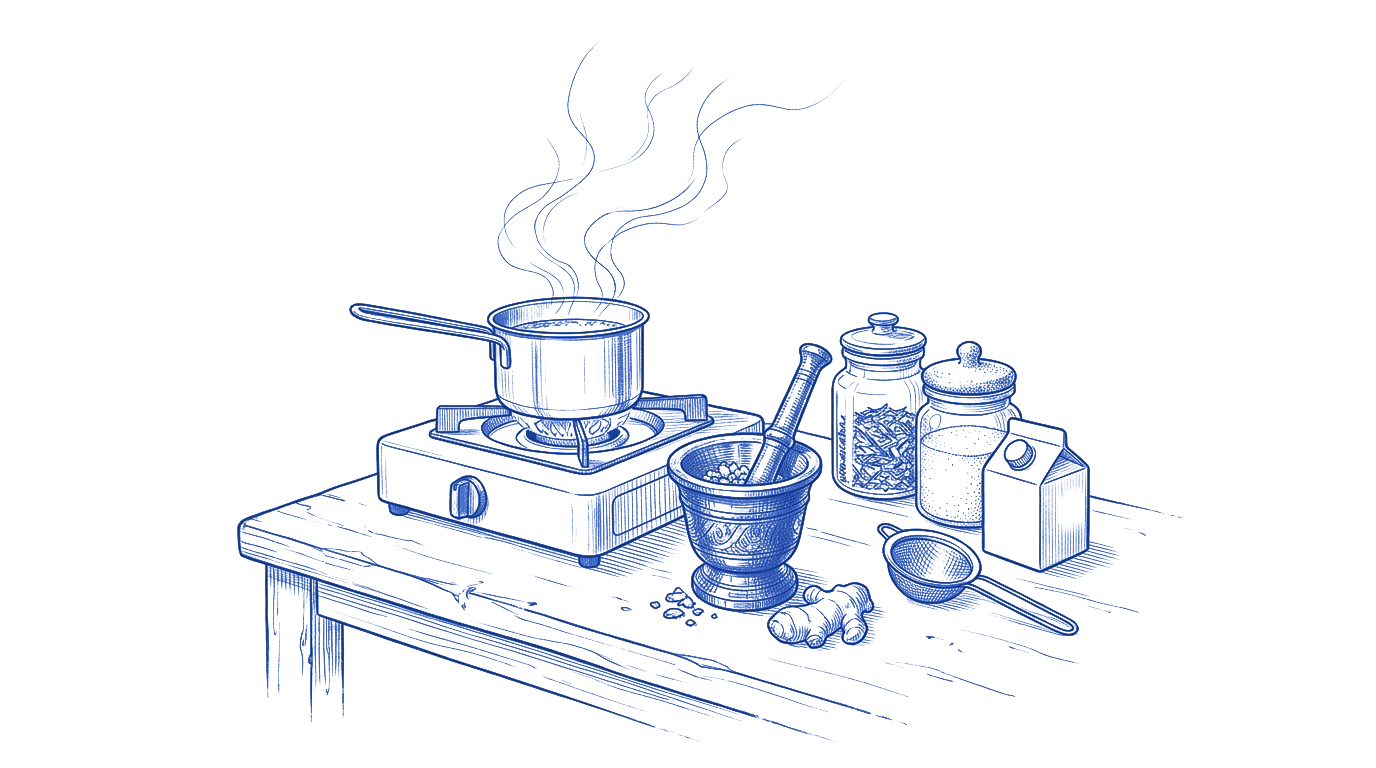
- The Water: Pour 2 cups of fresh water into a small, heavy saucepan and bring it to a rolling boil over a steady flame (a detail obvious to all, yet occasionally forgotten in haste).
- The Root: Take an inch-cube of fresh ginger. Crush it firmly in a mortar and pestle rather than grating it. Grating bruises the fibres and turns the liquid harsh, while crushing releases the fragrant oils and juice cleanly without bitterness.
- The Infusion: Add the crushed ginger into the simmering water. Allow it to bubble for a minute or two, long enough to impart its warmth, but not so long that the spice overpowers the liquor.
- The Leaf: Turn the flame down slightly and add 2 level teaspoons of strong CTC black tea leaves.
- The Varanasi Secret (sugar at the boil): Add two small teaspoons of sugar while the liquor is actively boiling. Years ago, while sipping tea at dawn near the ghats in Varanasi, I had the good fortune of meeting a chemistry professor from Banaras Hindu University. Over steaming cups, he gave me a rigorous scientific breakdown of caramelisation and molecular extraction to explain why sugar must dissolve while the tea leaves are boiling, rather than stirred in at the end. I could not follow the chemical equations then, and I do not pretend to comprehend them now. But I trust the man implicitly, and the cup has never lied.
- The Milk and The Colour: After a minute of simmering, pour in 1 cup of whole milk. Bring the pot back to a gentle, rising boil. Let the froth crest once or twice, lowering the heat just before it spills, until the surface settles into a warm, toasted golden hue that is neither milky pale nor astringently dark.
- The Pour: Strain into two warm cups. Enjoy it piping hot in the company of someone whose presence you cherish. And if you are alone, let the second cup keep you company.

Advisor, operator, and storyteller with Lucknow roots. Decades of building category-creating enterprises and navigating life with patience taught him the quiet power of simplification.
Join the Discussion on X
Have thoughts, a contrasting view, or battle scars of your own? Join the conversation on X. Zero spam, real perspectives.